Group
Anti-CTLA-4 mAb
Group Profile
| Therapeutic Class | Monoclonal Antibodies (mAbs) |
| Drug Class | Checkpoint Inhibitors |
| Mechanism of Action | CTLA-4 inhibitor |
| Drugs in group | Ipilimumab· Tremelimumab |
Location
Treated site
Study design
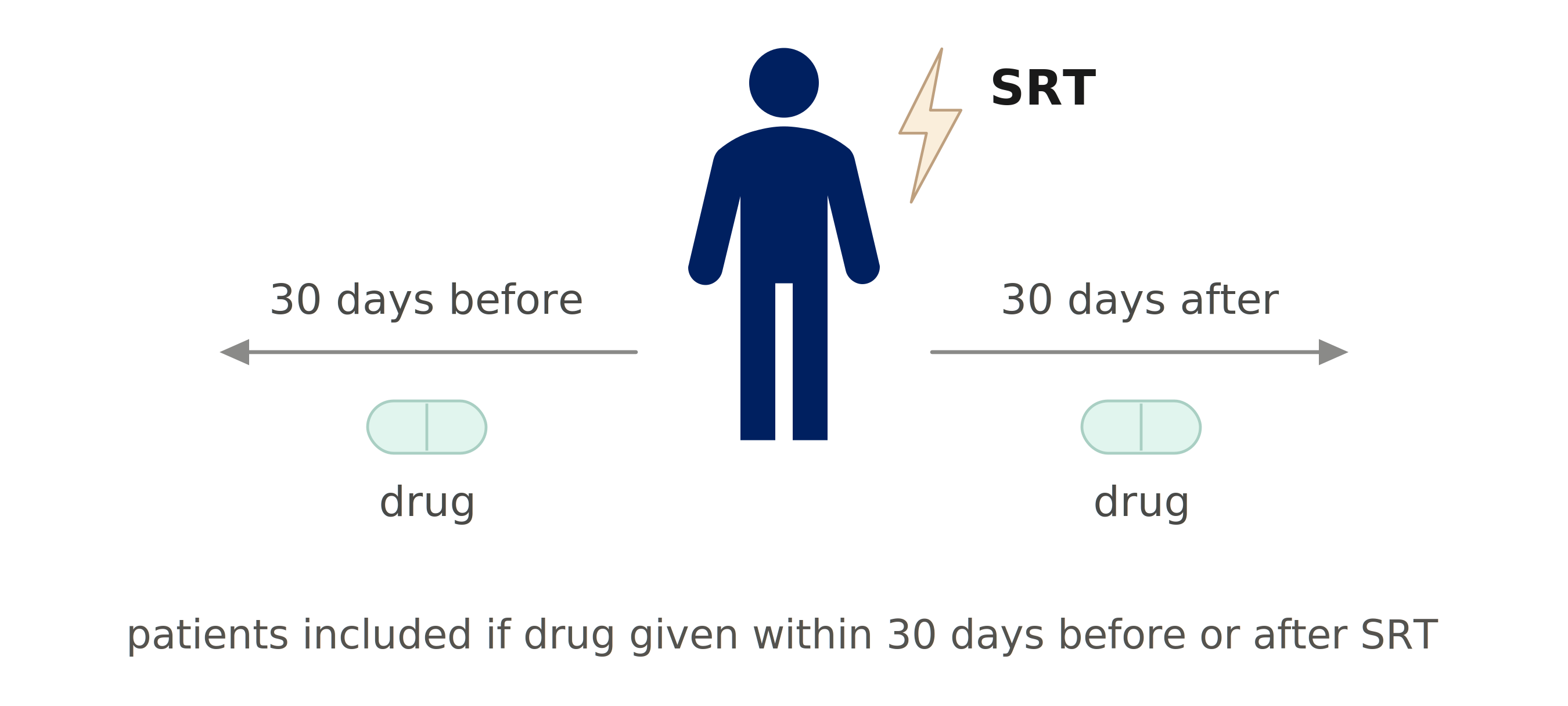
RT–Drug Timing Window
Study design
RT–Drug Timing Window
Data: details & interpretation
“For anti-CTLA-4 mAb, five studies[1-5] (one prospective and four retrospective) included 151 patients treated with anti-CTLA-4 within one month of SRT (wmFUP: 17.4mo). Most patients (92%) received SRT to the brain. A hgRTAE rate of 4.1-6.3% (2-3/48) was observed, all of whom received intracranial SRT. A hgOAE rate of 24.6% was noted in 57 patients, with 11 hgOAEs in 45 patients receiving intracranial SRT with ipilimumab at 10mg/kg, and 3 hgOAEs in 12 patients receiving extracranial SRT with ipilimumab at 3mg/kg.”
References (5)
- 1. Minniti G, Anzellini D, Reverberi C, et al. Stereotactic radiosurgery combined with nivolumab or Ipilimumab for patients with melanoma brain metastases: evaluation of brain control and toxicity. J Immunother Cancer. Apr 11 2019;7(1):102. doi:10.1186/s40425-019-0588-y
- 2. Diao K, Bian SX, Routman DM, et al. Stereotactic radiosurgery and ipilimumab for patients with melanoma brain metastases: clinical outcomes and toxicity. J Neurooncol. Sep 2018;139(2):421–429. doi:10.1007/s11060-018-2880-y
- 3. Kiess AP, Wolchok JD, Barker CA, et al. Stereotactic radiosurgery for melanoma brain metastases in patients receiving ipilimumab: safety profile and efficacy of combined treatment. Int J Radiat Oncol Biol Phys. Jun 1 2015;92(2):368–75. doi:10.1016/j.ijrobp.2015.01.004
- 4. Skrepnik T, Sundararajan S, Cui H, Stea B. Improved time to disease progression in the brain in patients with melanoma brain metastases treated with concurrent delivery of radiosurgery and ipilimumab. Oncoimmunology. 2017;6(3):e1283461. doi:10.1080/2162402x.2017.1283461
- 5. Sundahl N, De Wolf K, Kruse V, et al. Phase 1 Dose Escalation Trial of Ipilimumab and Stereotactic Body Radiation Therapy in Metastatic Melanoma. Int J Radiat Oncol Biol Phys. Mar 15 2018;100(4):906–915. doi:10.1016/j.ijrobp.2017.11.029
Radiobiological rationale for RT–drug interaction
Immunologically synergistic via intratumoral Treg depletion and type-I IFN (Sharabi et al., Lancet Oncology, 2015; Formenti et al., Nature Medicine, 2018). The theoretical added risk is immune-mediated; loss of regulatory T-cell restraint provides a rationale for enhanced colitis/enterocolitis that could be additive with abdominopelvic RT-induced mucosal injury.
The data above refer to patients treated with Anti-CTLA-4 mAb as the sole drug class,
excluding any concurrent use of drugs from other groups.
Combination therapy data are available in the section below.
Individual Drugs
Select a drug to view its individual evidence base (drug + SBRT, no other concurrent systemic drugs). Drugs without available data are shown greyed out.