Group
Aurora A kinase inhibitor
Group Profile
| Therapeutic Class | Targeted Therapy |
| Drug Class | Other Targeted Agents |
| Mechanism of Action | Aurora A kinase inhibitor |
| Drugs in group | alisertib |
Study design
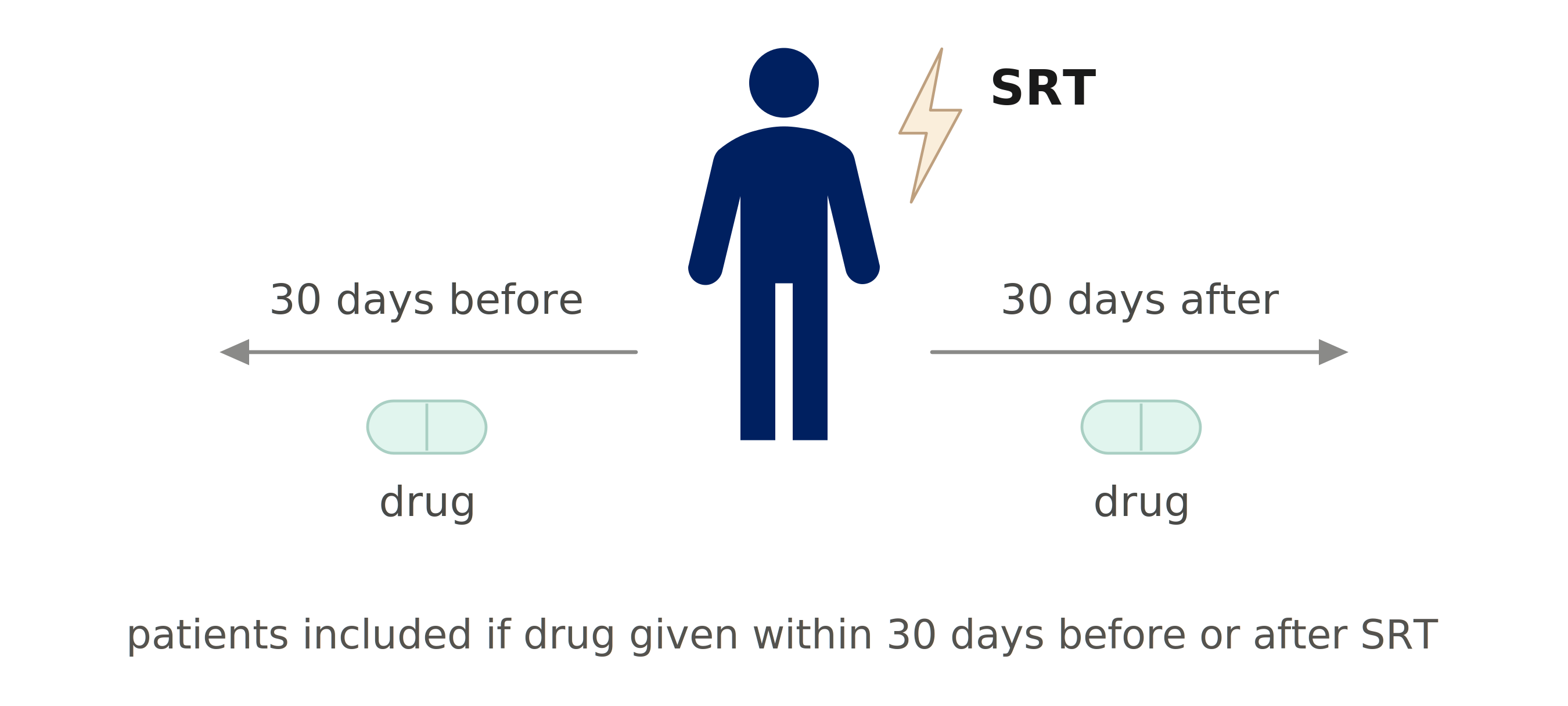
RT–Drug Timing Window
Study design
RT–Drug Timing Window
Data: details & interpretation
“One prospective study[1] included 17 patients treated with alisertib in combination with SRT for recurrent high grade glioma (wmFUP: 11mo). The observed rate of high grade radiation necrosis was 5.9%.
In summary, data remains too limited to draw conclusions.”
References (1)
- 1. Song A, Andrews DW, Werner-Wasik M, et al. Phase I trial of alisertib with concurrent fractionated stereotactic re-irradiation for recurrent high grade gliomas. Radiotherapy and oncology : journal of the European Society for Therapeutic Radiology and Oncology. Mar 2019;132:135–141. doi:10.1016/j.radonc.2018.12.019
Radiobiological rationale for RT–drug interaction
Radiosensitizing, largely p53-dependent (G2/M arrest, sustained DSBs, mitotic catastrophe) (Li et al. International Journal of Radiation Oncology, Biology, Physics 2023; Moretti et al. International Journal of Radiation Oncology, Biology, Physics 2011; Chen et al. Experimental Cell Research 2026). Mitotic-checkpoint disruption is not tumor-selective, so a theoretical increase in in-field adverse events and additive myelosuppression/mucositis is plausible.
The data above refer to patients treated with Aurora A kinase inhibitor as the sole drug class,
excluding any concurrent use of drugs from other groups.
Individual Drugs
Select a drug to view its individual evidence base (drug + SBRT, no other concurrent systemic drugs). Drugs without available data are shown greyed out.