
Group
CDK4/6 inhibitor
Group Profile
| Therapeutic Class | Targeted Therapy |
| Drug Class | CDK4/6 Inhibitors |
| Mechanism of Action | CDK4/6 inhibitor |
| Drugs in group | Palbociclib· Abemaciclib· Ribociclib |
Location
Treated site
Study design
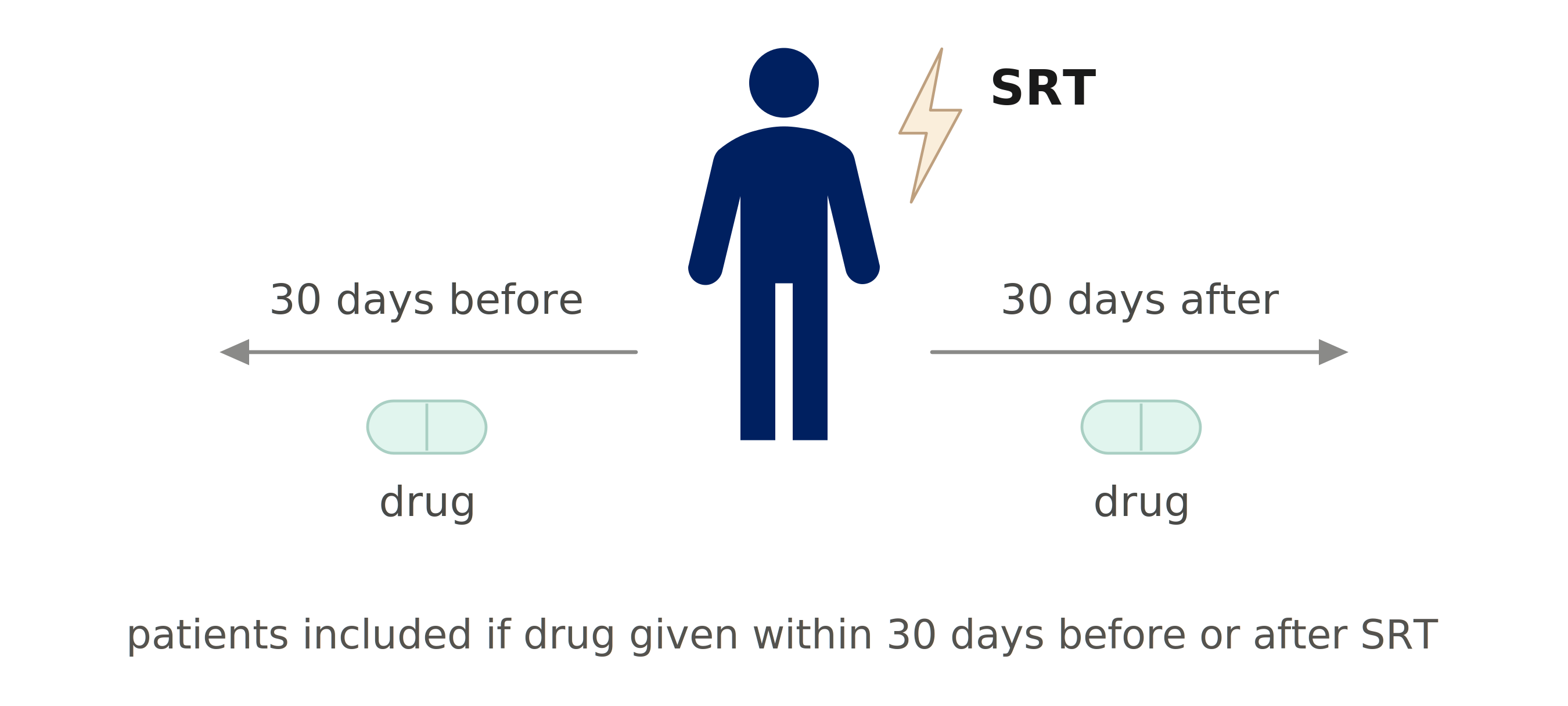
RT–Drug Timing Window
Study design
RT–Drug Timing Window
Data: details & interpretation
“One prospective publication[1] reported on three patients treated with a CDK4/6 inhibitor within one month of SRT. One patient received brain SRT, during which the CDK4/6 inhibitor was paused, whereas two patients received lung SRT with continuation of the drug during SRT. No high-grade RTAEs were reported.
In summary, data remains too limited to draw conclusions.”
References (1)
- 1. Looman EL, Kroeze SGC, Schaule J, et al. Adverse Events After Metastases-Directed Stereotactic Radiotherapy and Biological Cancer Therapy. JAMA Netw Open. 2026/01/02/ 2026;9(1):e2553809. doi:10.1001/jamanetworkopen.2025.53809
Radiobiological rationale for RT–drug interaction
Radiosensitizing but strictly RB-dependent (G1 arrest, ↓HR repair) (Yang et al., Translational Oncology, 2024; Pesch et al., Clinical Cancer Research, 2020). The dominant theoretical added adverse event is hematologic, because cycling normal marrow within the field shares the drug's cell-cycle target, giving a rationale for additive myelosuppression; overlap with proliferating GI epithelium provides a rationale for enhanced intestinal/mucosal reactions.
The data above refer to patients treated with CDK4/6 inhibitor as the sole drug class,
excluding any concurrent use of drugs from other groups.
Individual Drugs
Select a drug to view its individual evidence base (drug + SBRT, no other concurrent systemic drugs). Drugs without available data are shown greyed out.