

Group
EZH2 inhibitor
Group Profile
| Therapeutic Class | Targeted Therapy |
| Drug Class | Epigenetic Modifiers |
| Mechanism of Action | EZH2 inhibitor |
| Drugs in group | Tazemetostat |
Study design
RT–Drug Timing Window
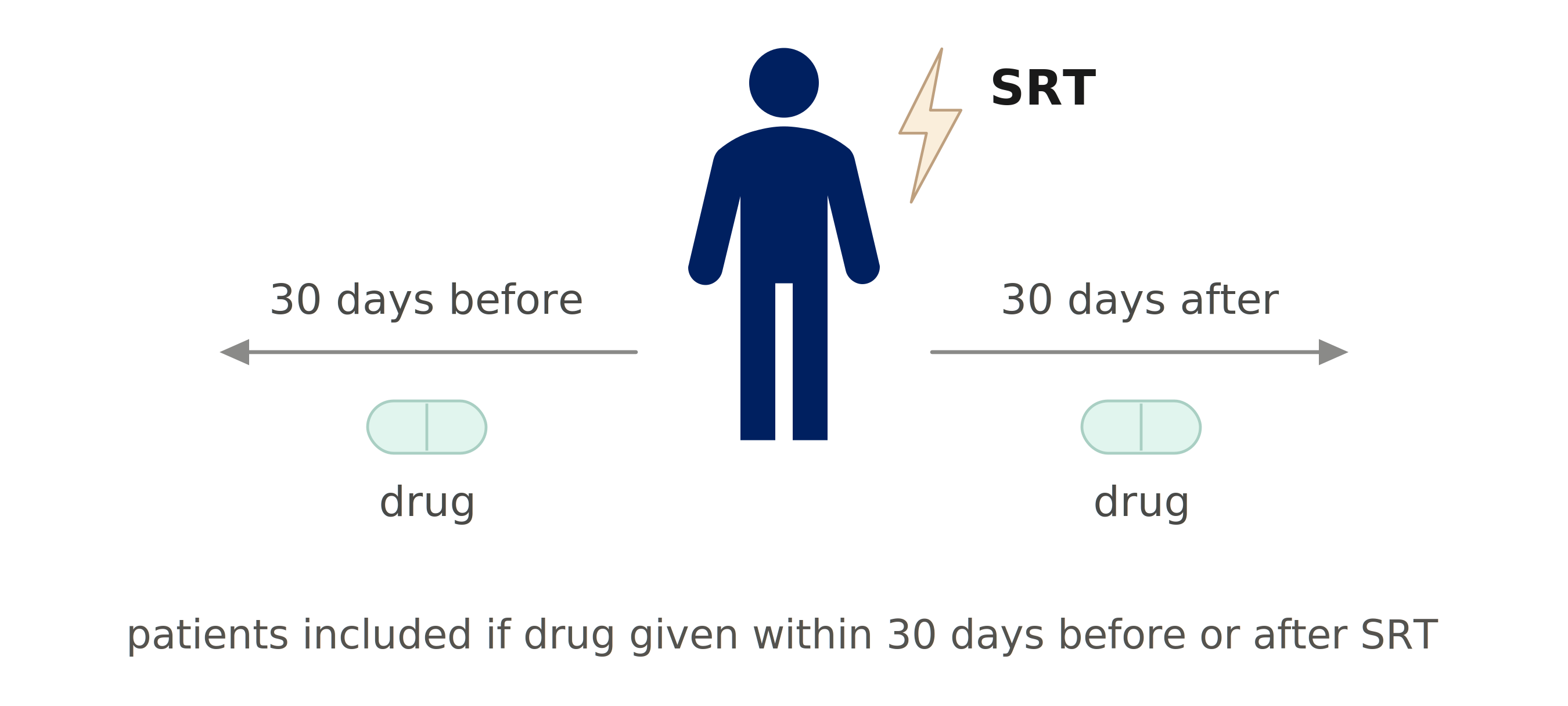
Study design
RT–Drug Timing Window
Radiobiological rationale for RT–drug interaction
Effect is context-dependent and can go either direction. In most solid tumors, EZH2 inhibition radiosensitizes by increasing DNA double-strand breaks, suppressing DNA-repair gene expression, and promoting ferroptosis. In some tumors, however, the resulting loss of H3K27me3 instead confers radioresistance rather than sensitization (Du et al., Journal of Cellular and Molecular Medicine, 2026; Liao et al., PNAS, 2022; Gabriel et al., Cancer Research, 2022). In the tumor types where sensitization does occur, it works by de-repressing DNA-damage-response genes epigenetically—a mechanism not restricted to tumor cells—so a theoretical increase in in-field adverse events is possible in that setting.
The data above refer to patients treated with EZH2 inhibitor as the sole drug class,
excluding any concurrent use of drugs from other groups.
Individual Drugs
Select a drug to view its individual evidence base (drug + SBRT, no other concurrent systemic drugs). Drugs without available data are shown greyed out.