

Group
mTOR
Group Profile
| Therapeutic Class | Targeted Therapy |
| Drug Class | PI3K/AKT/mTOR Pathway Inhibitors |
| Mechanism of Action | mTOR inhibitor |
| Drugs in group | Everolimus· Nab-Sirolimus· Temsirolimus |
Location
Study design
RT–Drug Timing Window
Study design
RT–Drug Timing Window
Data: details & interpretation
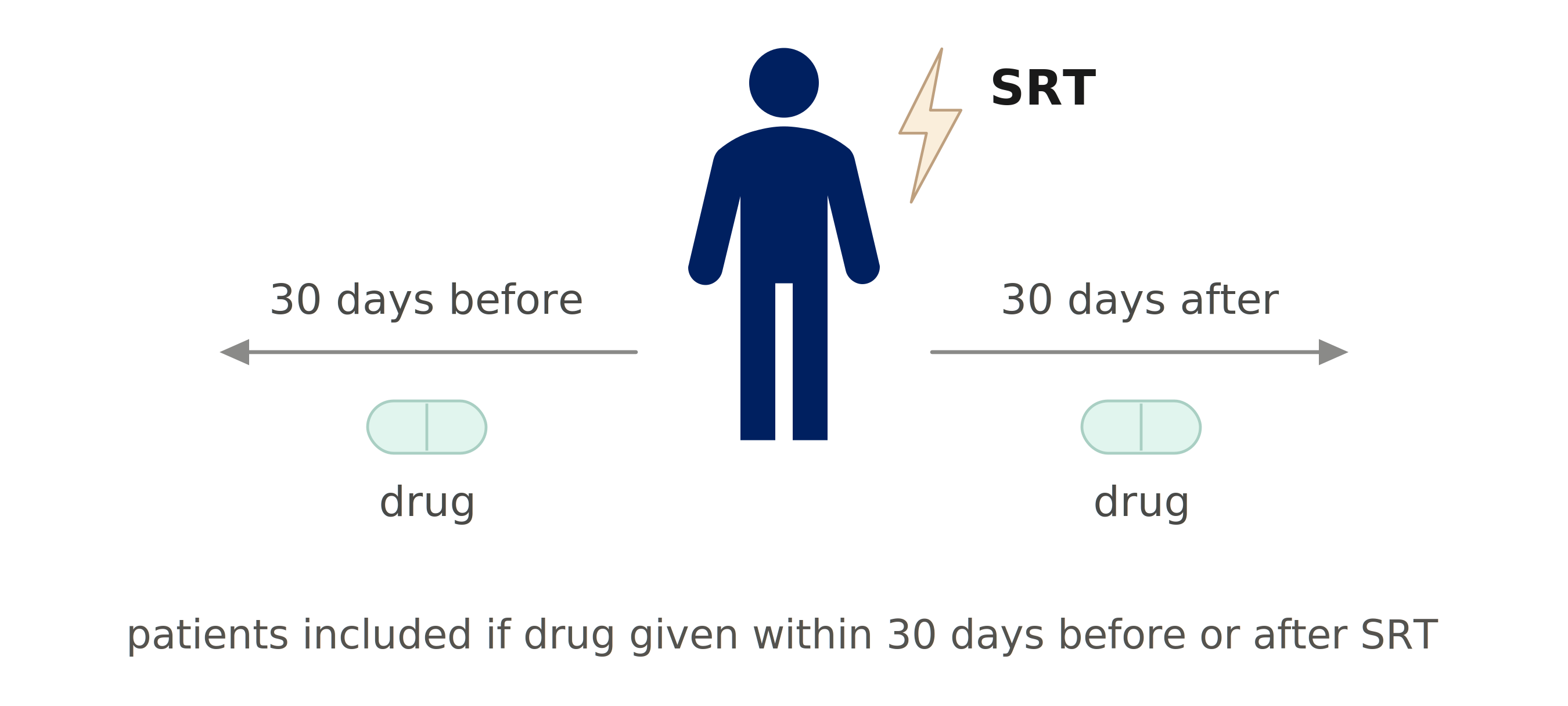
“Four publications[1,2] [3,4] (two prospective and two retrospective) included 11 patients treated with mTOR inhibitors within one month of SRT (wmFUP: 12.3mo). Treatment sequencing varied (paused, sequential, or concurrent), but the number of patients per group was not reported. Overall, three patients (27.3%) experienced high-grade RTAEs. Notably, one event occurred in a patient in whom the drug was paused.
In summary, data remain too limited to draw conclusions.”
References (4)
- 1. Dengina N, Mitin T, Gamayunov S, Safina S, Kreinina Y, Tsimafeyeu I. Stereotactic body radiation therapy in combination with systemic therapy for metastatic renal cell carcinoma: a prospective multicentre study. ESMO Open. 2019;4(5):e000535. doi:10.1136/esmoopen-2019-000535
- 2. Franzese C, Marvaso G, Francolini G, et al. The role of stereotactic body radiation therapy and its integration with systemic therapies in metastatic kidney cancer: a multicenter study on behalf of the AIRO (Italian Association of Radiotherapy and Clinical Oncology) genitourinary study group. Clin Exp Metastasis. Dec 2021;38(6):527–537. doi:10.1007/s10585-021-10131-w
- 3. Looman EL, Kroeze SGC, Schaule J, et al. Adverse Events After Metastases-Directed Stereotactic Radiotherapy and Biological Cancer Therapy. JAMA Netw Open. 2026/01/02/ 2026;9(1):e2553809. doi:10.1001/jamanetworkopen.2025.53809
- 4. Kroeze SGC, Fritz C, Schaule J, et al. Stereotactic radiotherapy combined with immunotherapy or targeted therapy for metastatic renal cell carcinoma. BJU Int. Jun 2021;127(6):703–711. doi:10.1111/bju.15284
Radiobiological rationale for RT–drug interaction
Generally radiosensitizing (↓DNA-repair translation, impaired NHEJ, cytotoxic autophagy, antiangiogenesis), though inconsistent with rapalogs due to feedback AKT activation (Holler et al., PLoS One, 2016; Dumont and Bischoff, Current Cancer Drug Targets, 2012). A theoretical increase in adverse events is plausible via non-selective repair inhibition, compounded by the class-specific propensity for stomatitis/mucositis and pneumonitis overlapping in-field reactions.
The data above refer to patients treated with mTOR as the sole drug class,
excluding any concurrent use of drugs from other groups.
Combination therapy data are available in the section below.
Individual Drugs
Select a drug to view its individual evidence base (drug + SBRT, no other concurrent systemic drugs). Drugs without available data are shown greyed out.