

EGFR targeting TKI
| Therapeutic Class | Targeted Therapy |
| Drug Class | Tyrosine Kinase Inhibitors (TKIs) |
| Mechanism of Action | EGFR inhibitor |
| Drugs in group | Afatinib· Erlotinib· Gefitinib· Icotinib· Lazertinib· Osimertinib· Dacomitinib· Mobocertinib· Sunvozertinib |
Data: details & interpretation
“EGFR-targeting TKI within the same month of lung SRT appeared well tolerated; in contrast to brain SRT which led to a 49% rate of hgOAEs, warranting caution. High-grade OAE rates of 40.8% have been reported with erlotinib monotherapy, suggesting part of these AEs may reflect systemic treatment rather than the combination with radiotherapy.[1]”
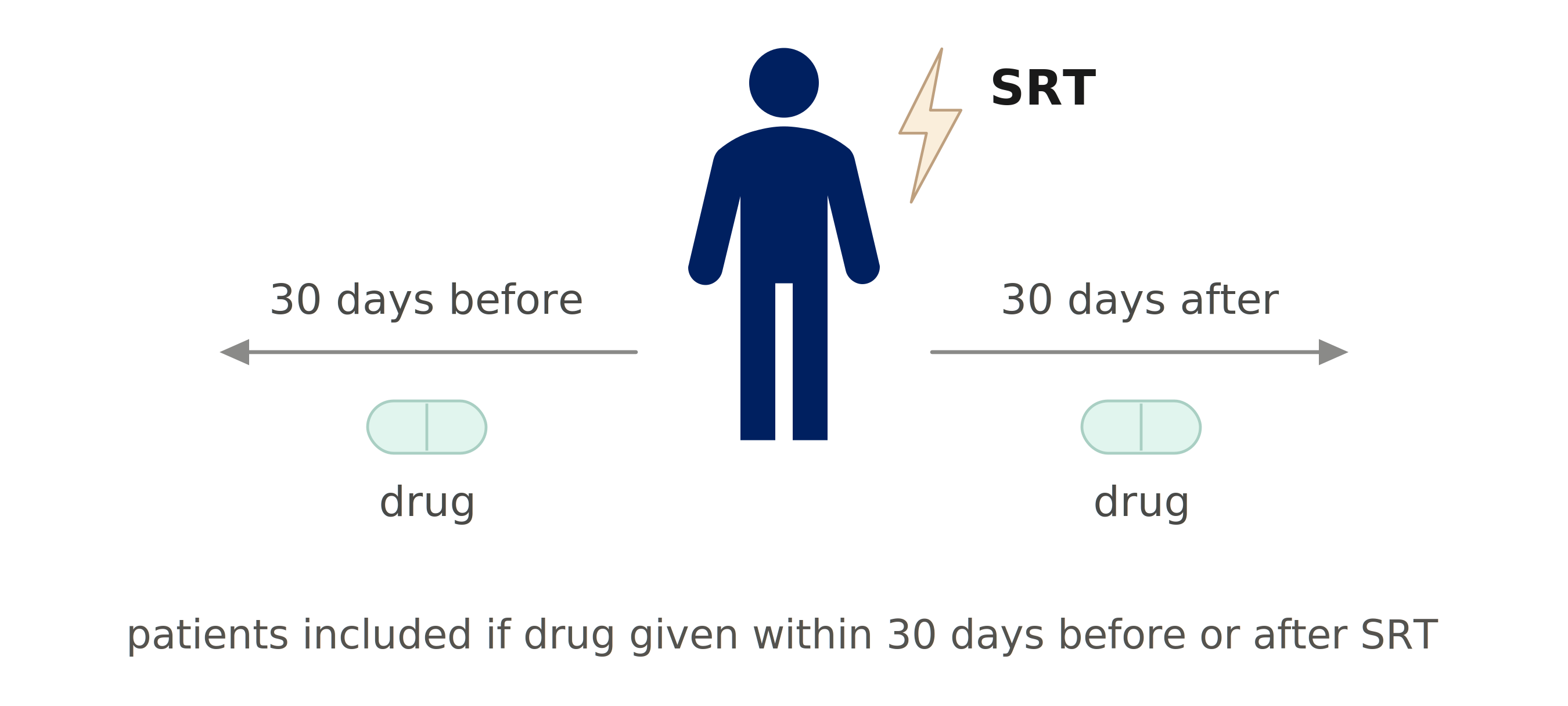
“For epidermal growth factor receptor (EGFR)-targeting TKIs, fifteen publications (nine prospective and six retrospective) included 500 patients treated with the drug within one month of SRT (wmFUP: 25.8mo). The following rates of grade ≥3 AEs were observed: 15.6-17.5% for OAEs (46-52/297), and 6.4% for RTAEs in 203 patients. No increased AE rate was noted for lung SRT (Fig 4a), of whom most patients (97.6%) received an EGFR-targeting TKI throughout SRT.”
“Four studies[2-5] (two prospective and two retrospective) included 122 patients treated with EGFR-targeting TKIs within one month of brain SRT (wmFUP: 30.5mo). EGFR-targeting TKIs were given concurrently, started shortly after SRT, or paused during SRT (6 patients); the exact distribution was not reported. Among 81 patients, 8.6% experienced hgRTAEs. In one study of 41 patients who received whole brain RT in addition to SRT and erlotinib during RT, hgOAEs occurred in 49%, although in-field events were not specified.”
References (5)
- 1. Hesketh PJ, Chansky K, Wozniak AJ, et al. Southwest Oncology Group phase II trial (S0341) of erlotinib (OSI-774) in patients with advanced non-small cell lung cancer and a performance status of 2. Journal of thoracic oncology : official publication of the International Association for the Study of Lung Cancer. Sep 2008;3(9):1026–31. doi:10.1097/JTO.0b013e318183aa1f
- 2. Looman EL, Kroeze SGC, Schaule J, et al. Adverse Events After Metastases-Directed Stereotactic Radiotherapy and Biological Cancer Therapy. JAMA Netw Open. 2026/01/02/ 2026;9(1):e2553809. doi:10.1001/jamanetworkopen.2025.53809
- 3. Kim HJ, Kim WS, Kwon DH, Cho YH, Choi CM. Effects of an Epithelial Growth Factor Receptor-Tyrosine Kinase Inhibitor Add-on in Stereotactic Radiosurgery for Brain Metastases Originating from Non-Small-Cell Lung Cancer. Journal of Korean Neurosurgical Society. Sep 2015;58(3):205–10. doi:10.3340/jkns.2015.58.3.205
- 4. Sperduto PW, Wang M, Robins HI, et al. A phase 3 trial of whole brain radiation therapy and stereotactic radiosurgery alone versus WBRT and SRS with temozolomide or erlotinib for non-small cell lung cancer and 1 to 3 brain metastases: Radiation Therapy Oncology Group 0320. Int J Radiat Oncol Biol Phys. Apr 1 2013;85(5):1312–8. doi:10.1016/j.ijrobp.2012.11.042
- 5. Yomo S, Oda K. Impacts of EGFR-mutation status and EGFR-TKI on the efficacy of stereotactic radiosurgery for brain metastases from non-small cell lung adenocarcinoma: A retrospective analysis of 133 consecutive patients. Lung cancer (Amsterdam, Netherlands). May 2018;119:120–126. doi:10.1016/j.lungcan.2018.03.013
Radiobiological rationale for RT–drug interaction
Select a drug to view its individual evidence base (drug + SBRT, no other concurrent systemic drugs). Drugs without available data are shown greyed out.